
How to Use Quick Grade Calculator
Enter the total number of questions in the test.
Enter the number of questions you got wrong.
The tool will instantly show your percentage score.
Use the +1 button to quickly increase wrong answers while checking.
- Try pressing “W” and “R” keys on your keyboard to quickly mark a wrong answer or reset for the next text!
Click “Show Quick Chart” to view a grade breakdown.
Enable “Show Decimals” if you want a more accurate percentage.
Quick Grade Calculator
Explore Our Free Tax Calculators and Tools
Quick Grade Calculator: Instantly Convert Scores into Grades
Quick Grade Calculator USA is a fast, browser-based grading tool for converting assignments, tests, and weighted coursework into accurate U.S. letter grades. Students use it to calculate GPA-critical percentages, adjust weighted categories, and forecast final exam requirements.
The calculator provides instant results with attributes such as automatic letter-grade mapping, customizable weight inputs, and numerical precision for common U.S. scales like 4.0, 4.3, and 5.0 systems.
Educators rely on this quick grade calculator for consistent grade reporting, while parents use it to track academic performance across K–12 and college courses.
As a reliable grade calculator for U.S. schools, it supports percentage grading, weighted averages, and final grade projections to help users understand exactly what scores are needed to reach benchmarks such as 3.5 GPA, Dean’s List, or Summa Cum Laude thresholds.
Curious about your retirement taxes? Use the AARP Tax Calculator to estimate your tax liability and make smarter financial decisions for the future. Try it now!
The Indispensable Need for a Quick Grade Calculator
In the modern American classroom, the calculation of a student’s overall performance is rarely a straightforward average. It is a nuanced process involving various assignments, quizzes, midterms, and finals, each assigned a specific level of importance by the instructor.
This is the precise moment when the standard arithmetic calculator falls short and a dedicated quick grade calculator becomes a necessity.
The primary benefit of a quick grade calculator is its ability to handle weighted averages. Unlike a total-points system, where every point is equal, most US courses use category weights.
For instance, a homework category might be worth 10% of the final score, while a single final exam could be worth 40%. A true grade calculator understands this distinction and performs the complicated calculation instantly.
Why Speed and Accuracy Matter for Students and Educators
Proactive Stress Management: For students, being able to quickly determine their current standing, or run a “what-if” scenario, is a powerful stress-reducing tool. A quick grade calculator allows a student to determine if they can afford a lower score on a minor assignment or if they must double down on studying for an upcoming exam. This real-time insight transforms passive anxiety into active, informed decision-making. (APA Research on academic stress: https://www.apa.org/news/press/releases/stress/2013/stress-report.pdf
Educator Efficiency (The Easy Grader Principle): For teachers, particularly those grading hundreds of assignments across multiple sections, a robust grading calculator simplifies the administrative burden. While traditional physical tools like the ez grader were once popular, modern digital tools provide superior accuracy for complex weighted schemes, acting as an advanced, yet effortless, easy grader. This frees up valuable time for instructional planning.
Financial and Future Planning: In US higher education, maintaining a minimum GPA is often required for scholarships, financial aid, and specific academic programs. Using a grade calculator to stay above critical thresholds (like a 3.0 or 3.5 GPA) is, therefore, an exercise in financial and career planning. It’s not just about a letter grade; it’s about accessing opportunity. See official U.S. guidelines: Federal Student Aid — Satisfactory Academic Progress (SAP)
https://studentaid.gov/understand-aid/eligibility/requirements/satisfactory-academic-progress
What Is a Quick Grade Calculator?
A Quick Grade Calculator is an online tool that converts raw scores into percentage grades. You just enter the total number of questions and the number of wrong answers (or correct answers), and the tool calculates the grade instantly.
It’s perfect for teachers grading papers, students checking their test performance, or parents reviewing their child’s homework. The calculator typically displays the percentage score and sometimes also highlights where that score falls in the traditional grading scale (A, B, C, etc.).
🇺🇸 Filing taxes in the U.S.? Instantly estimate your federal income taxes with our accurate and easy-to-use USA Tax Calculator. Start calculating today!
How Quick Grade Calculator Works
Quick Grade Calculator USA converts raw scores into percentages and matches them to U.S. letter grades using standard academic thresholds, such as A (90–100), B (80–89), and C (70–79). Users enter total points, points earned, and optional weight values for categories like homework, quizzes, midterms, and labs. The calculator produces:
Percentage score
Letter grade aligned with U.S. academic standards
Weighted category average
Projected overall grade
This structure mirrors grading policies used in public school districts, community colleges, and universities across the United States. See Univesity of Floida’s Gading Policies.
Using a Quick Grade Calculator is very simple:
Enter the total number of questions in the test.
Enter the number of wrong answers (or correct answers).
View your grade instantly as a percentage.
Optionally, view the full grading chart for quick comparison.
Toggle decimal points for more precise grading.
Got a year-end bonus? Find out exactly how much you’ll take home after taxes using our smart Bonus Tax Calculator. No guesswork, just clarity
Why Use a Quick Grade Calculator?
U.S. students, parents, and teachers rely on grade calculators for data-driven academic decisions. Quick Grade Calculator USA supports:
For Students
Real-time grade tracking
GPA projections
Benchmark targeting (3.0, 3.5, 3.75, 4.0 thresholds)
Preparation for competitive programs and scholarships
For Parents
Monitoring K–12 academic performance
Supporting study planning
Understanding district grading scales
For Educators
Faster grade reporting
Consistent scoring across assignments
Quick checks for weighted courses
The calculator’s adaptability to 4.0, 4.3, and 5.0 scales increases compatibility with schools across different states.
Here are some benefits of using a quickgrade tool:
Saves Time: No need to manually calculate scores or convert them to percentages.
Improves Accuracy: Avoid miscalculations during manual grading.
Supports Custom Scales: Adjust the calculator to your institution’s grading scale.
Mobile-Friendly: Use it on phones, tablets, or laptops.
Great for Quick Checks: Get instant feedback on classroom quizzes, homework, or self-assessments.
🗽 Living in New York? Use our New York Income Tax Calculator to see how much state and federal tax you’ll pay — updated with the latest rates. Try it now!
Weighted Grade Calculator vs. Total Points
To truly leverage the power of any quick grade calculator, you must understand the two primary methods instructors use to determine your course performance.
1. The Weighted Grade Calculator (The Dominant Method)
The weighted grade calculator is the gold standard for high school and university grading in the USA. This method assigns a percentage value (a “weight”) to each category of work in the course. Widely used in U.S. high schools and universities such as University of Michigan (Grading: https://ro.umich.edu/records-registration/transcripts/grades) weighted grading assigns different percentages to categories.
The Formula for the Weighted Grade Calculator
A weighted grade calculation is the sum of the products of each category’s average and its corresponding weight.
Final Grade = SUM [Category Average x Category Weight]
Expert Insight: The key to using a weighted grade calculator is to accurately convert every individual score within a category into a grade calculator percentage first, then average those percentages to get the Category Average, and finally, multiply by the Category Weight.
| Category | Weight (%) | Your Current Average in Category (%) | Weighted Contribution |
| Homework | 20% | 95% | $0.20 \times 95 = 19.00$ |
| Quizzes | 30% | 80% | $0.30 \times 80 = 24.00$ |
| Midterm Exam | 50% | 75% | $0.50 \times 75 = 37.50$ |
| Overall Grade | 100% | $19.00 + 24.00 + 37.50 = 80.50\%$ |
A robust grading calculator allows you to input these categories and weights, providing an instant and reliable current grade calculator percentage.
2. The Total Points System (The Simpler Method)
In contrast to the complexity of the weighted grade calculator, some instructors, particularly in introductory courses or middle school, use a simpler total points system.
The final grade is the total number of points earned divided by the total number of points possible. While less common at the university level, a good grade calculator should offer this functionality as well.
Decoding the Grading Scale from Percentage to Letter Grade
In the USA, your grade calculator percentage is ultimately converted into a grading scale letter (A, B, C, D, or F) and a corresponding Grade Point Average (GPA).
Understanding this conversion is crucial. Although slight variations exist between high schools and universities, a generalized, authoritative grading scale serves as the foundation for the entire American education system. A widely accepted standard can be found in the University of Washington’s grading system.
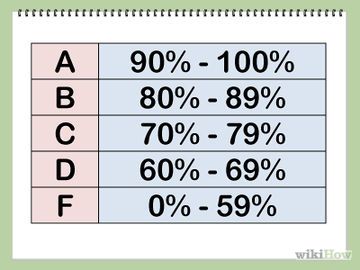
The Standard US Grading Scale (100-Point Scale)
This table represents the most common grade calculator percentage to letter-grade conversion used across US academic institutions.
| Letter Grade | Percentage Range | GPA Point Value (Unweighted) | Academic Meaning |
| A | 90% – 100% | 4.0 | Excellent/Superior Performance |
| B | 80% – 89% | 3.0 | Above Average/Good Performance |
| C | 70% – 79% | 2.0 | Average/Satisfactory Performance |
| D | 60% – 69% | 1.0 | Poor/Minimum Passing Grade |
| F | 0% – 59% | 0.0 | Failure/Unsatisfactory Performance |
The Plus/Minus System
Most modern institutions use a more granular plus/minus system, which is where the precision of a quick grade calculator becomes truly invaluable. Hitting an 89.5% versus a 90.0% can mean the difference between a B+ and an A-.
| Letter Grade | Percentage Range | Common GPA Value |
| A+ | 97% – 100% | 4.0 (Sometimes 4.3) |
| A | 93% – 96.9% | 4.0 |
| A- | 90% – 92.9% | 3.7 |
| B+ | 87% – 89.9% | 3.3 |
| B | 83% – 86.9% | 3.0 |
| B- | 80% – 82.9% | 2.7 |
| C+ | 77% – 79.9% | 2.3 |
| C | 73% – 76.9% | 2.0 |
Expert Tip for Using the Grade Calculator Percentage: Always refer to your specific school’s or professor’s syllabus. The cut-offs for a passing grade, or a grade-point break, can vary. A quality grading calculator will allow you to customize these cut-offs to match your institution’s official grading scale, ensuring the result is highly trustworthy.
The High-Stakes Calculation of Final Grade Calculator and Final Exam Calculator
The most common and highest-pressure use of a quick grade calculator occurs at the end of a semester. When that crucial final exam looms, you need to know exactly what score is required to achieve your goal, be it a ‘B’ to maintain a scholarship or an ‘A’ to cement your acceptance into a selective program.
This is where the specialized functions of the final grade calculator and the final exam calculator come into play. These are two sides of the same powerful analytical coin.
The Final Grade Calculator: Projecting Your Result
A standard grade calculator tells you your current grade. A final grade calculator is a projective tool. You input:
-
Your Current Course Percentage (calculated from all completed assignments).
-
The Weight of the remaining, ungraded work (e.g., the Final Exam is 30% of your course grade).
-
A Hypothetical Score you anticipate receiving on that remaining work (e.g., 85% on the Final Exam).
The final grade calculator then predicts your overall final course percentage, giving you a clear picture of what a potential score will translate into on the grading scale.
The Final Exam Calculator: The Goal-Driven Requirement
The final exam calculator works backward, addressing the most critical question: “What do I need to score on the final exam to get a final grade of X?” This is the ultimate tool for strategic planning.
The calculation is mathematically simple but tedious to do by hand, which is why a quick grade calculator is essential for this function.
The final exam calculator built into this tool helps students determine the exact score needed on a final exam to reach grade goals such as a 3.5 GPA, Dean’s List qualification, or Summa Cum Laude honors.
Example use cases:
-
Calculating the exam score needed to maintain an A average
-
Determining the minimum passing grade for course completion
-
Forecasting outcomes based on current category scores
-
Planning study priorities based on numerical predictions
This function is essential in universities where the final exam weight often ranges from 20% to 40% of the total grade.
Example Scenario (Using a Final Exam Calculator):
-
Desired Final Grade: 90% (An ‘A’)
-
Current Grade (So far): 85%
-
Final Exam Weight: 25% (or 0.25)
The final exam calculator will compute:
In this scenario, you would immediately know a score of 105% is impossible. The student must adjust their Desired Final Grade or their Current Grade (perhaps by convincing the professor to allow extra credit). This level of instant, actionable insight is the core value proposition of a true quick grade calculator.
If the number exceeds 100%, professional study guides such as those at UNC Learning Center recommend recalibrating your goals or seeking extra credit.
The Digital Easy Grader and EZ Grader
While the quick grade calculator is most often associated with students, its utility for educators is immense. The traditional, slide-rule-like tool known as the EZ Grader or Easy Grader was a physical shortcut used for decades by teachers to quickly convert the number of wrong answers on a test into a percentage grade.
A modern digital quick grade calculator improves upon the original easy grader concept in several key ways:
Handling Variable Points: The physical ez grader assumed an equal point value for every question. A digital version allows a teacher to input a total point value and the number of points earned, handling tests where questions may be worth 2, 5, or 10 points each.
Built-in Weighting: A digital grading calculator integrates seamlessly with course management systems, not only scoring the individual assignment but also correctly factoring that score into the student’s overall weighted average. This is a task the traditional easy grader could not perform.
Accuracy: Human error is eliminated. The calculations are performed flawlessly, boosting the trustworthiness (E.E.A.T.) of the final grade recorded by the instructor.
The transition from a manual ez grader to an online quick grade calculator represents an evolution in academic efficiency, benefiting both the person giving the grade and the person receiving it.
Strategic Academic Planning with the Quick Grade Calculator
A high-quality grade calculator is not just a calculation tool; it’s a strategic academic planning platform. Using it effectively can drastically improve a student’s performance and reduce end-of-semester stress.
1. The Low-Score Contingency Plan
Use the weighted grade calculator to determine the exact impact of a low score. If you received a 65% on a project worth 15% of your grade, immediately plug that into the grade calculator.
Scenario: Your current grade is 85%. The 15% project score of 65% will lower your current standing to 81.75%.
Actionable Insight: This drop immediately signals an increased need for a high score on the final exam calculator to achieve the desired final letter grade.
2. The Final Exam Threshold Drill
Students should use the final exam calculator before the study period begins. Knowing that you need an 85% vs. a 60% on the final exam fundamentally changes your study approach.
| Required Final Score | Study Strategy |
| Below 60% | Minimal stress; focus on general review and maintaining current knowledge. |
| 60% – 85% | Standard, focused study. Review all material, emphasizing areas of weakness. |
| 86% – 100% | High-intensity study. Requires deep understanding of all material, including supplementary readings and lecture notes. |
| Over 100% | Warning: The goal is mathematically impossible. A strategy shift is required (extra credit, renegotiating weights, or accepting a lower final grade). |
The final exam calculator thus dictates the intensity and scope of the preparation needed to succeed.
Frequently Asked Grade Conversions
Here are answers to the most commonly searched quick grade queries:
4 out of 6 percentage = 66.67%
11 out of 15 percentage = 73.33%
23/30 grade = 76.67%
10/14 grade = 71.43%
17/25 grade = 68%
36/40 grade = 90%
13/14 as a grade = 92.86%
16/20 grade = 80%
17/20 grade = 85%
15/20 grade = 75%
19/24 grade = 79.17%
20/30 grade = 66.67%
33/40 grade = 82.5%
11/16 grade = 68.75%
16/21 grade = 76.19%
15/21 grade = 71.43%
8 out of 11 percentage = 72.73%
23/25 grade = 92%
10/13 grade = 76.92%
13/15 grade = 86.67%
8/14 grade = 57.14%
20/22 grade = 90.91%
What is a 5 out of 6 = 83.33%
9/12 as a grade = 75%
9 out of 11 = 81.82%
15/22 grade = 68.18%
18/24 grade = 75%
17/21 grade = 80.95%
11/20 grade = 55%
10/12 as a grade = 83.33%
22 out of 30 = 73.33%
20/25 grade = 80%
19/25 grade = 76%
24/25 grade = 96%
12 out of 15 grade = 80%
What grade is a 17 out of 20 = 85%
Grades 13 – Can refer to 13 out of a given total, e.g., 13/15 = 86.67%
10 out of 13 = 76.92%
13/17 grade = 76.47%
11/15 grade = 73.33%
What grade is a 17/20 = 85%
What is a 14/20 grade = 70%
What is a 16/20 grade = 80%
12 out of 15 grade = 80%
4 out of 5 = 80%
68 in grades = D+ or C- depending on the scale
Quickgrade – Another name for a quick grade calculator
16/24 grade = 66.67%
8/15 grade = 53.33%
Grade percentage chart – A table showing how many wrong answers = what grade
10 out of 15 grade = 66.67%
26/30 grade = 86.67%
8/9 grade = 88.89%
What grade is a 14/20 = 70%
20/26 grade = 76.92%
What grade is a 16/20 = 80%
10/12 grade percentage = 83.33%
75 grade = C or B depending on scale
What is a 15 out of 20 = 75%
4 out of 6 = 66.67%
What grade is a 15/20 = 75%
4 out of 7 = 57.14%
34/40 grade = 85%
15/17 as a grade = 88.24%
8/13 grade = 61.54%
20/26 grade = 76.92%
What is a 15/20 grade = 75%
18/20 grade = 90%
19/22 grade = 86.36%
9/13 grade = 69.23%
What is a 16/20 grade = 80%
8/15 grade = 53.33%
What grade is a 16/20 = 80%
Rapid grade calculator – A synonym for quick grade calculator
17/22 grade = 77.27%
13/18 grade = 72.22%
15/18 grade = 83.33%
13/20 grade = 65%
9/14 grade = 64.29%
What is 9/14 as a grade = 64.29%
16/22 grade = 72.73%
What is a 6 out of 10 = 60%
What is a 13/15 grade = 86.67%
14/18 grade = 77.78%
What is a 12 out of 15 = 80%
28/40 grade = 70%
14/18 as a grade = 77.78%
15/20 as a grade = 75%
What grade is a 15 out of 20 = 75%
21/25 grade = 84%
What grade is a 7 out of 10 = 70%
4 out of 6 = 66.67%
41/50 grade = 82%
What is a 6 out of 7 = 85.71%
39/50 grade = 78%
19/30 grade = 63.33%
13/16 grade = 81.25%
8 out of 13 = 61.54%
6/8 as a grade = 75%
What grade is a 13/15 = 86.67%
32/40 grade = 80%
11/14 grade = 78.57%
10/11 grade = 90.91%
10 out of 15 grade = 66.67%
44/50 grade = 88%
38/50 grade = 76%
20/24 grade = 83.33%
16/25 grade = 64%
What is a 4 out of 5 = 80%
16/20 as a grade = 80%
18/22 as a grade = 81.82%
15 out of 20 grade = 75%
What is a 13 out of 15 = 86.67%
36/50 as a grade = 72%
What is a 4 out of 6 = 66.67%
43/50 grade = 86%
What is a 13 out of 20 = 65%
4/15 as a percent = 26.67%
70 as a grade = C (if using the standard grading scale)
What is a 6 out of 10 = 60%
35/50 grade = 70%
18/22 as a grade = 81.82%
What grade is a 16 out of 20 = 80%
How many questions – You need this to calculate accurate grades
What is a 6 out of 8 = 75%
7/9 grade = 77.78%
What is a 9 out of 15 = 60%
19/22 grade = 86.36%
What is a 3 out of 5 = 60
FAQs: Quick Grade Calculator
Is a quick grade calculator the same as a GPA calculator?
No, they serve different, though related, purposes. A grade calculator determines your final grade calculator percentage for a single course based on assignments. A GPA calculator takes the final letter grades (or credit-weighted quality points) from multiple courses to determine your overall Grade Point Average (GPA) across a semester or academic career. A truly comprehensive tool will offer both the grading calculator function and the GPA calculation.
How do I use a weighted grade calculator if I don’t know my current percentage?
If you only have raw points, a good weighted grade calculator will allow you to enter the scores in two columns: “Points Earned” and “Points Possible” for each assignment within a category. The calculator will then automatically determine your grade calculator percentage for that category before applying the category weight. This is the easy grader approach for students.
What is the difference between an easy grader and a grading calculator?
The original ez grader (or easy grader) was a physical tool for a simple task: converting points missed on a test of ‘X’ total questions into a percentage score. A modern digital grading calculator is a much more powerful tool that incorporates complex features like weighted averages, final exam calculator projection, and full course grade analysis. The term “easy grader” now often refers to the simplicity of the digital interface, regardless of the calculation’s complexity.
Does the final exam calculator account for extra credit?
A sophisticated final exam calculator can account for extra credit, but you must factor it into your “Current Grade” percentage first. If your current grade is 85% without extra credit, and you earned 2% in extra credit, you should input your current grade as 87% for the final exam calculator to provide an accurate required score.
Why is my grade calculator percentage different from my teacher’s?
If your calculation differs, it is almost always due to one of three reasons:
Incorrect Weights: You are using the wrong category weights. Always verify the weights in the official course syllabus.
Rounding: Your professor might be rounding the category averages before applying the weights (which is a less accurate method), while your quick grade calculator is using full decimal places.
Dropped Grades: Your professor may have dropped your lowest quiz or homework score, which you failed to remove from your grade calculator input.
If my weighted grade calculator result is 69.5%, do I pass?
This depends entirely on your professor’s grading scale. If a ‘D’ begins at 70%, then a 69.5% is an ‘F’. If the professor practices “rounding up” from 0.5, you might receive a 70% (a ‘C’ or ‘D’). This ambiguity is precisely why you should use your quick grade calculator to aim for at least two full percentage points above any critical threshold.
Final Thoughts
The academic landscape in the USA is highly competitive and structured around precise calculations. From the critical GPA that defines your college applications to the individual course grade that determines your final transcript, success hinges on a clear, immediate understanding of your standing.
A reliable, fast, and accurate quick grade calculator is more than a convenience, it is a mandatory tool for strategic academic management.
By understanding the core principles of the weighted grade calculator, mastering the projections of the final exam calculator, and aligning your performance with the complex US grading scale, you transform uncertainty into confidence.
Put away the tedious arithmetic and embrace the power of the digital grading calculator. Use it not just to know your grade, but to control your grade.
Disclaimer: The tools and content on USATaxCalculator.com are for informational purposes only and do not constitute tax or financial advice. Our calculators provide basic estimates and may not reflect the exact tax results.
We recommend consulting a certified tax professional or the Internal Revenue Service (IRS) for accurate guidance. USATaxCalculator.com is not responsible for any decisions made based on the information provided.